
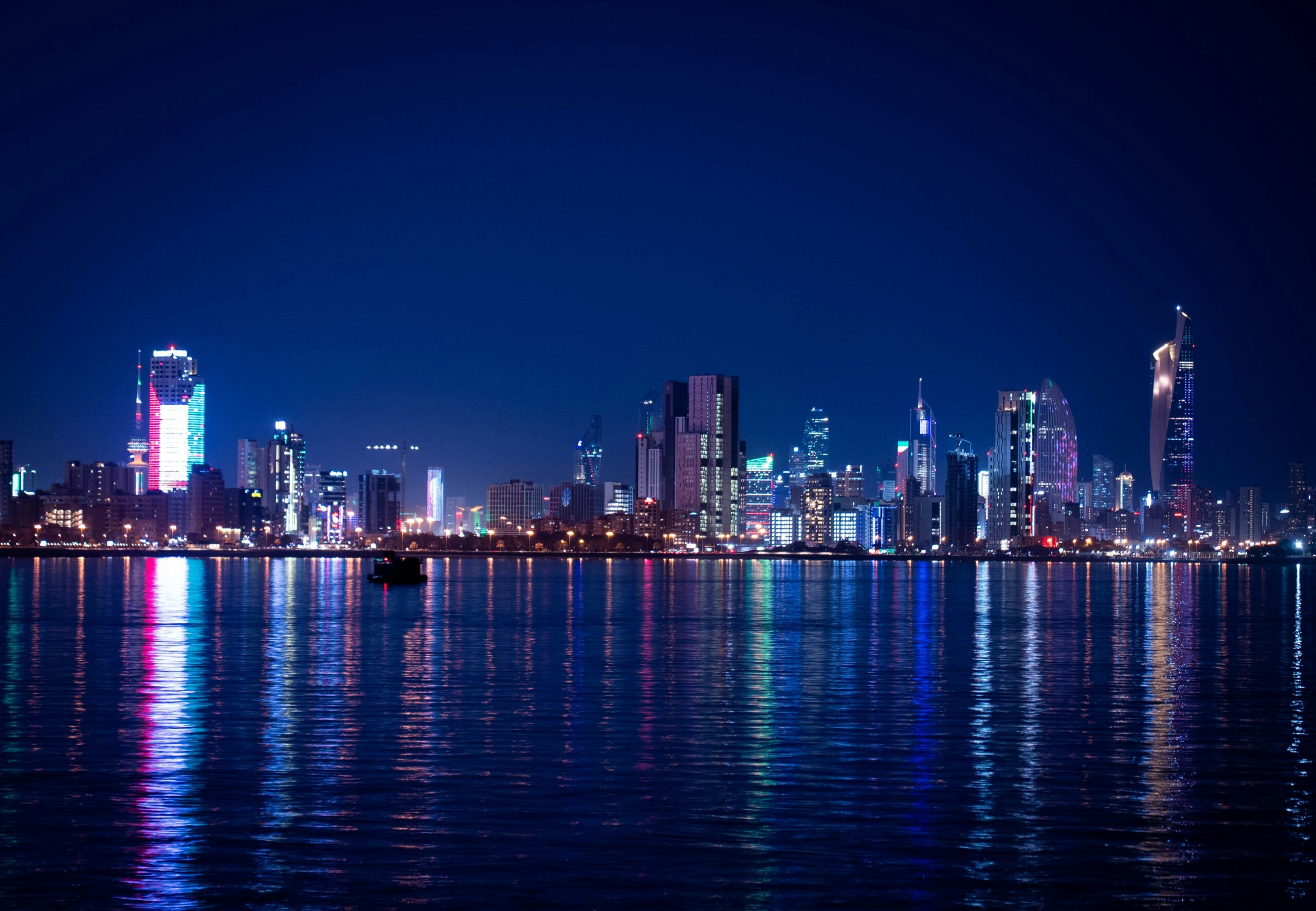
Market snapshot
Kuwait is one of the GCC’s steadiest construction markets, with an estimated $36bn construction pipeline and around $16bn of infrastructure still to come. It rarely makes the headlines like Saudi Arabia or the UAE, but it offers long-term, government-backed work.
Contract awards reached a record $5.6bn in 2024 and $5.5bn in 2025. Despite wider regional tensions in 2026, the market has held its footing, with $1.2bn awarded by late July.
The government’s 2025–2026 development plan includes 141 projects aligned with Kuwait Vision 2035, which aims to modernise infrastructure and diversify the economy away from oil.
Major projects under Vision 2035
| Project | Status (2026) |
|---|---|
| Mubarak Al-Kabeer Port | A $4bn EPC contract for the remaining phases was awarded in late 2025 |
| Kuwait International Airport Terminal 2 | Major expansion of the country’s main airport |
| South Al-Mutlaa and South Sabah Al-Ahmad residential cities | Large-scale housing with extensive roads, utilities and drainage packages |
| Shuaiba Port modernisation | Bids received in July 2026 for infrastructure and electrical works |
| Subbiya power and water plant, Phase IV | A 900MW gas turbine expansion |
| New Al-Sabah Hospital | Major healthcare facility |
| Kuwait Direct Investment Promotion Authority tower | A 55-storey, 275m office tower, due in 2028 |
Working in Kuwait
Roles in demand. Housing, ports, utilities and airport work drive demand for project and programme managers, infrastructure and roads engineers, MEP and utilities specialists, planners, and contracts and commercial managers. Experience with Kuwaiti government clients, such as the Public Authority for Housing Welfare and the Ministry of Public Works, is highly valued.
Bringing your family. You need a monthly salary of at least KD 800 to sponsor your spouse and children under 18. A university degree matching your job is normally required, although engineers are among the professions exempt from this rule.
Exit permits. Since July 2025, private-sector expatriates need their employer’s approval before leaving Kuwait, even for a holiday. Requests are made online through the Sahel app and are usually straightforward, but it’s worth factoring into travel plans.
Tax. Kuwait has no personal income tax on salaries.
Kuwait is generally more conservative and quieter than Dubai or Doha, with lower living costs. It suits professionals and families looking for stable, long-term roles rather than a fast-paced lifestyle.
Frequently asked questions
Is Kuwait a good place for construction jobs in 2026?
Yes, particularly for long-term government work. Kuwait has an estimated $36bn construction pipeline, and contract awards held up well in 2026 despite regional tensions.
What are the biggest construction projects in Kuwait?
They include Mubarak Al-Kabeer Port, Kuwait International Airport Terminal 2, new residential cities such as South Al-Mutlaa, the Shuaiba Port upgrade and the Subbiya power plant expansion.
How much salary do I need to bring my family to Kuwait?
At least KD 800 a month to sponsor your spouse and children under 18.
Do I need permission to leave Kuwait?
Private-sector expatriates need their employer’s approval before travelling, requested online through the Sahel app.
Do I pay income tax in Kuwait?
No. There is no personal income tax on salaries in Kuwait.
Exploring opportunities in Kuwait?
One95 Global supports construction and infrastructure professionals and employers across the GCC. Speak to us for an honest view of the Kuwait market and what a move could mean for you and your family.
Speak to our team or browse our latest roles.
Sources: MEED, Times Kuwait, Fragomen, Middle East Briefing. Figures are indicative and change often.