
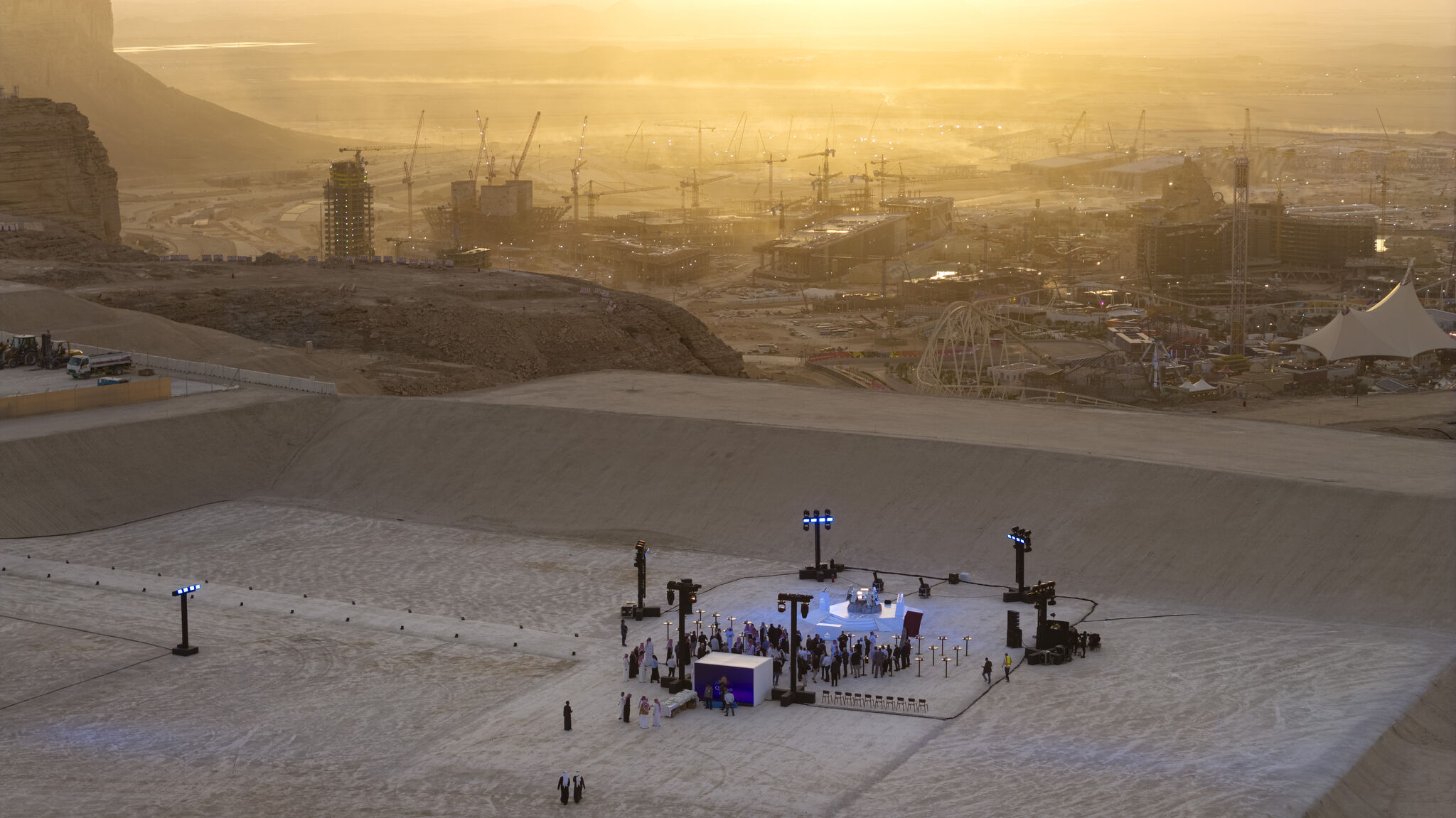
A Faster Connection to Qiddiya
Plans to dramatically enhance access to Qiddiya have progressed with proposals for a new high‑speed rail line linking the entertainment mega‑project to King Salman International Airport and the King Abdullah Financial District, according to Asharq Al‑Awsat. The proposed “Qiddiya Bullet Train” would cut travel time to around 30 minutes—roughly a 75% reduction compared to the current two‑hour journey—operating at speeds of up to 250 km/h as outlined by the Royal Commission for Riyadh City.
Part of a Wider Mobility Strategy
The high-speed line is one component of a wider mobility strategy aimed at strengthening connectivity across western and southwestern Riyadh to support population growth and continued urban expansion. In parallel, the Red Line extension of the Riyadh Metro has been awarded, adding 7.1 km of tunnel and 1.3 km of elevated track, with new stations—including King Saud University and Diriyah—designed to integrate with future lines such as the planned Line 7. Officials estimate that this expansion alone could remove around 150,000 vehicles from daily traffic, easing congestion and improving access to destinations such as Bujairi Terrace and Wadi Safar.
Rising Doubts Over Project Viability
However despite the momentum, questions remain over whether the Qiddiya Bullet Train will ultimately proceed as planned, especially given the enormous financial commitments Saudi Arabia has already made toward Expo 2030 Riyadh, massive urban redevelopment schemes, and major national investments including the FIFA World Cup 2034. While the high‑speed rail is positioned as a cornerstone of Riyadh’s future mobility framework and part of the long‑term Vision 2030 strategy, the sheer scale of concurrent giga‑projects—including the expansion of King Salman International Airport and multiple megadevelopments across Riyadh—raises natural uncertainty about whether funding, timelines, and strategic priorities will remain aligned long enough for the project to move forward without delay or downsizing. And although the Royal Commission continues to advance planning processes and tender phases, observers note that large‑scale infrastructure projects often face reassessment when national expenditure surges, especially during periods of intensified global event preparations